
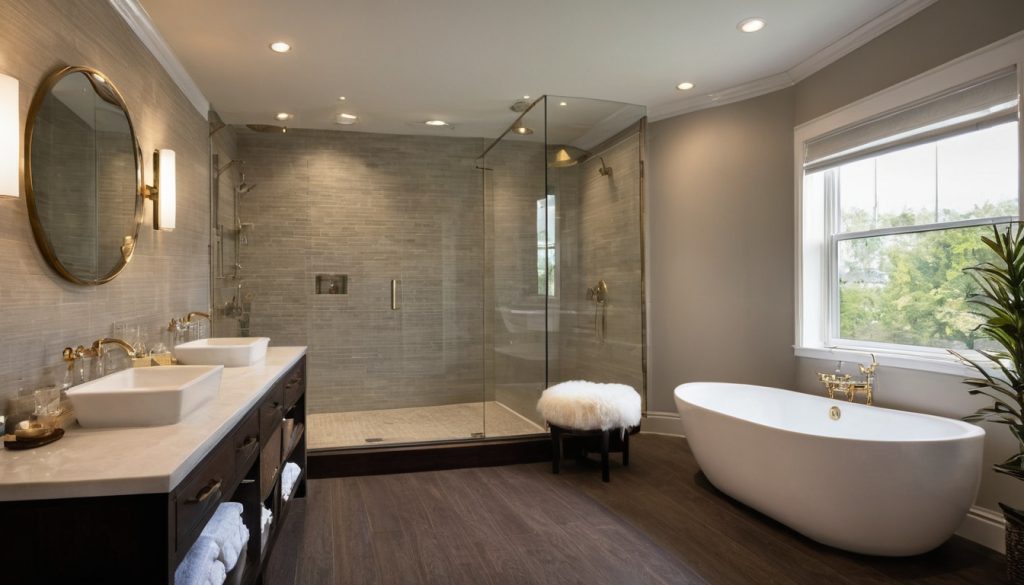
A realistic bathroom renovation cost is a layered budget, not a single average
California’s construction index rose 3.9% from December 2024 to December 2025, according to the California Department of General Services. That figure cannot predict a specific bathroom cost because the index reflects selected labor and material trends for San Francisco and Los Angeles, not residential bids, overhead, access problems, or concealed damage.
What belongs in a bathroom remodel cost breakdown?
A usable pre-bid budget separates construction, selections, and uncertainty:
- Known scope: protection, demolition, disposal, framing, plumbing, electrical, ventilation, waterproofing, finishes, installation, and cleanup.
- Finish allowances: fixtures, tile, vanity, glass, lighting, hardware, tax, delivery, and waste.
- Soft and project costs: design, engineering, permits, inspections, supervision, overhead, and profit.
- Risk reserve: concealed damage and unresolved scope, separate from optional upgrades.
Label the project correctly. A cosmetic refresh preserves serviceable assemblies. A same-layout renovation opens and rebuilds surfaces. A layout-changing renovation relocates services or partitions.
Bathroom size affects quantities, but scope and access often control the price
A 5-by-10 bathroom needs more finish material than a 5-by-7 room, but both may require the same trades, inspections, debris handling, and waterproofing. Stair carries, limited parking, occupied-home protection, or a finished ceiling below can outweigh extra square footage. Compare estimates using identical scope, access conditions, responsibilities, exclusions, and allowances.
Changing a bathroom layout raises cost when plumbing, structure, or electrical work must move
Keeping the toilet, shower, tub, and vanity near existing connections usually reduces cost, but framing direction, pipe condition, floor construction, and required upgrades determine the savings.
Which bathroom fixture moves create the greatest cost exposure?
Toilet relocation may require a larger drain, vent connection, framing alterations, or concrete cutting. Shower or tub relocation can require new drainage, valves, waterproofing, and structural work. Vanity relocation is often less disruptive when it remains within the existing plumbing zone.
Confirm applicable accessibility clearances before rough-in. Where accessible design applies, the 2010 ADA Standards specify a 30-by-48-inch clear floor space for wheelchair positioning.
A layout-change estimate must include restoration outside the bathroom
Require pricing for opening and repairing adjacent ceilings, walls, insulation, firestopping, flooring, trim, and paint. Convert exclusions such as “ceiling repair by owner” into priced alternates before signing.
Water damage should be budgeted as an investigation and repair allowance
Water damage cannot be priced accurately from stained caulk or a soft floor alone. Fund controlled investigation and carry repair allowances for subfloor, framing, insulation, and wall materials.
Which pre-demolition clues justify a larger concealed-damage reserve?
Persistent odors, loose tile, floor movement, swollen trim, ceiling stains, repeated grout repairs, and a leak history justify more investigation. Moisture readings and staining identify areas to examine but do not prove the source or extent of damage.
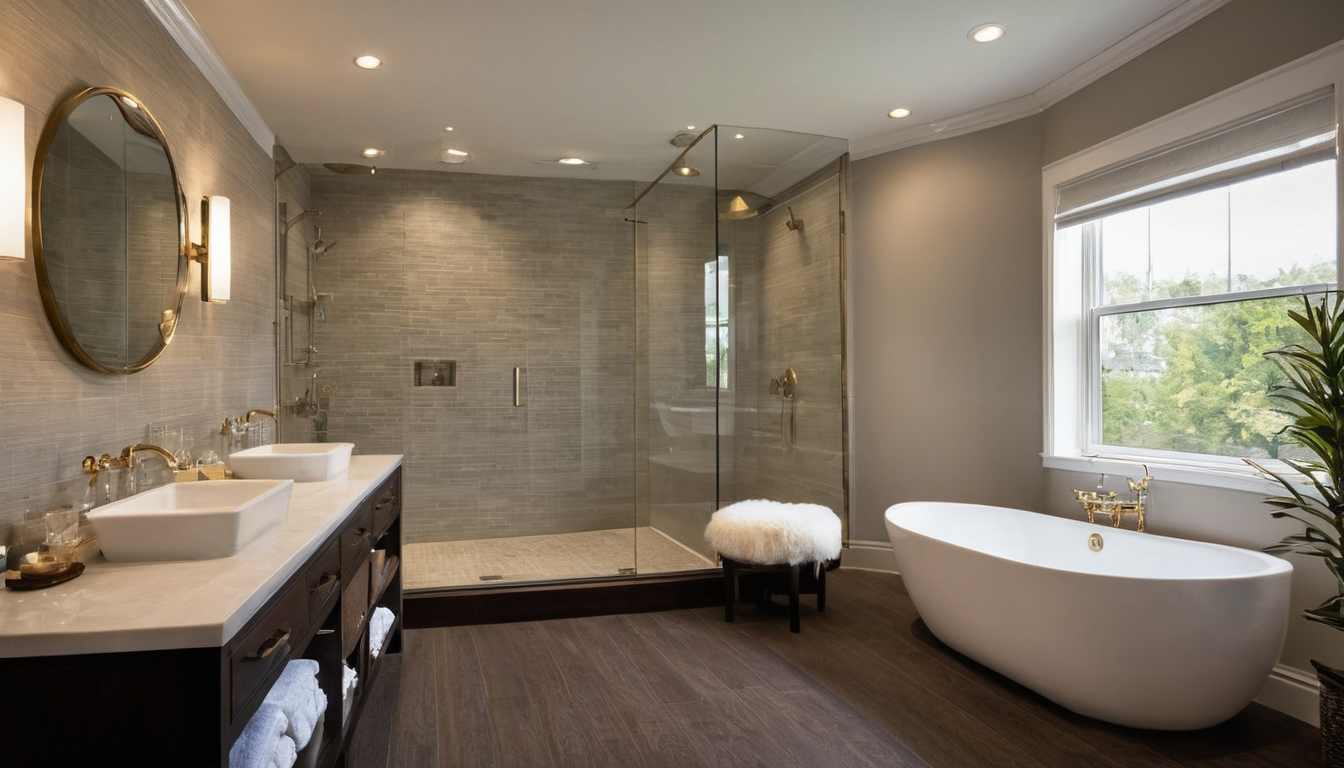
Water damage should be budgeted as an investigation and repair allowance shown with floor, wall, and fixture relationships visible.
An inspection can combine photographs, moisture measurements, supply and drain testing, and limited openings. The EPA moisture guide advises correcting wet or damp areas promptly to help prevent mold growth.
Water-damage repairs need measurable unit prices and stop-work rules
- Price subfloor, wallboard, backer board, and insulation by area.
- Price framing repair by member or length.
- Stop work, document conditions, and obtain approval before exceeding the allowance.
- Require specialist assessment when structural deterioration, suspected microbial growth, lead-based paint, or asbestos changes safe procedures.
Finish allowances should state products, quantities, taxes, delivery, and installation limits
A reliable finish allowance identifies products, quantities, sales tax, freight, lead time, markup, and installation costs excluded from the allowance.
Tile price does not represent the full installed tile cost
Installed tile cost includes substrate correction, waterproofing, trim, pattern cuts, breakage, setting materials, movement joints, and labor. Mosaics, large-format tile, and natural stone can increase preparation. The Natural Stone Institute recommends neutral cleaners for stone and warns that abrasive creams can scratch it.
Premium fixtures can add rough-in, reinforcement, and lead-time costs
A wall-mounted vanity may need blocking, a concealed valve demands precise framing, and custom glass requires field measurements after tile. Review custom marble lead times and installation planning before approving premium stone.
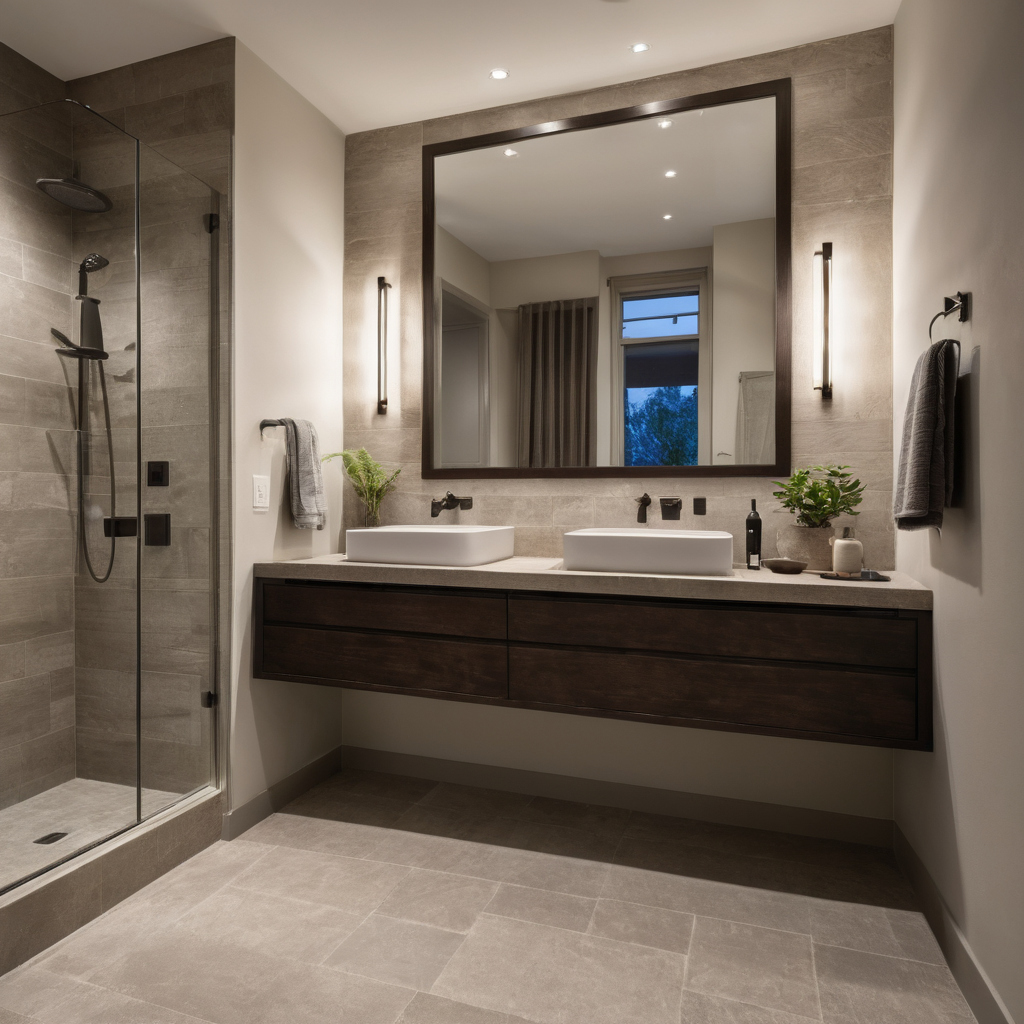
Finish allowances should state products, quantities, taxes, delivery, and installation limits shown as a planning reference for layout, scale, and material decisions.
Finish choices also affect operation. The EPA identifies paints, varnishes, and building materials as common indoor VOC sources.
Permits, access, and building rules can change the bathroom remodel price
Price permits and logistics before comparing bids. A driveway-access house is not equivalent to a condominium with work-hour limits, elevator reservations, insurance paperwork, and shared-water shutdowns.
Which bathroom changes commonly trigger permits and inspections?
Ask the local building department whether relocated drains, new circuits, exhaust work, altered walls, windows, or structural changes require permits. Confirm inspection requirements for electrical protection, ventilation, safety glazing, clearances, and licensed trades.
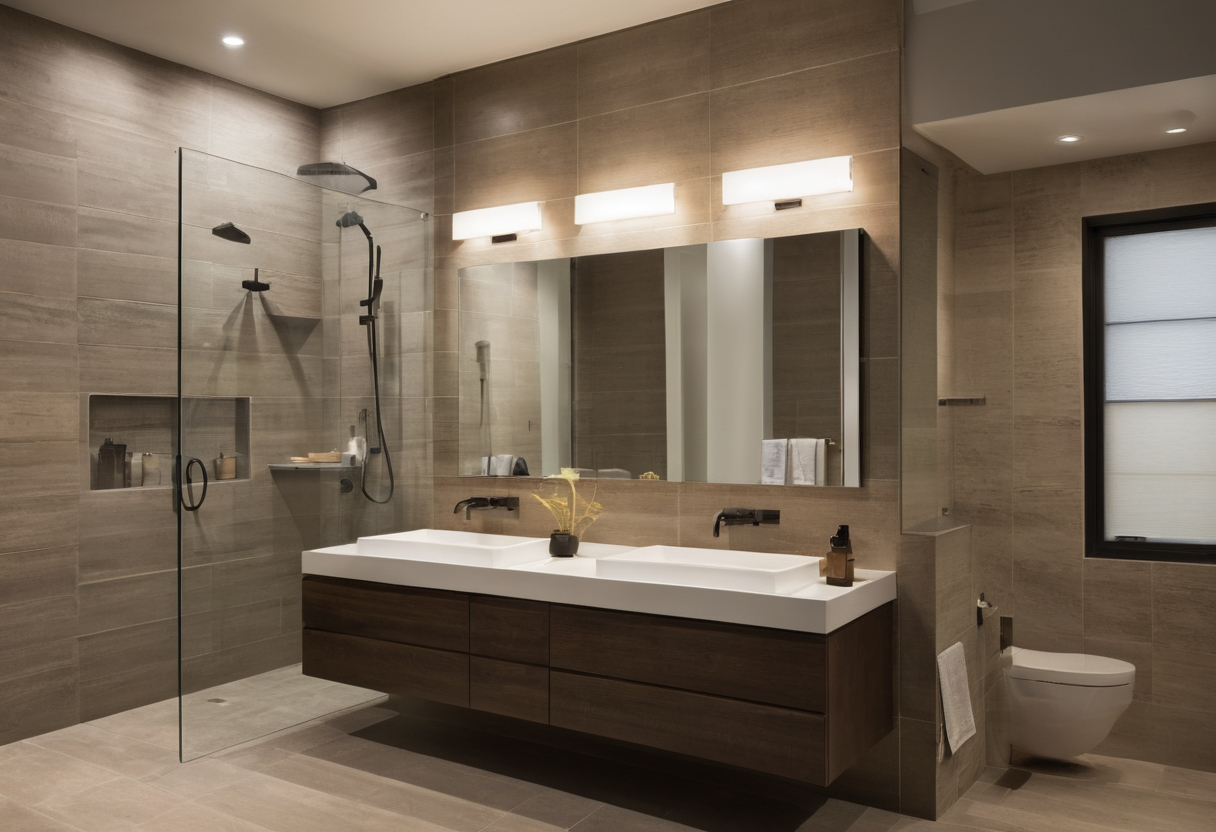
Permits, access, and building rules can change the bathroom remodel price shown with floor, wall, and fixture relationships visible.
Occupied homes and multifamily buildings add protection and coordination costs
Price dust barriers, floor and elevator protection, daily cleanup, stair carries, debris routes, parking limits, shutdown coordination, and restricted hours.
Bathroom renovation contingency should match unresolved risk, not a universal percentage
Contingency should rise with unresolved conditions. A documented same-layout room carries less uncertainty than an older bathroom with leaks, inaccessible pipes, slab work, or unopened walls.
A bathroom risk matrix can set the contingency before bidding
Rate building age, leak history, fixture moves, access, available records, exploratory openings, and regulated-material risk. Low uncertainty means investigated same-layout work; high uncertainty includes concealed systems, structural exposure, or unresolved moisture. The popular 30% rule is not a universal estimating standard.
Contingency is not permission to leave the bathroom scope undefined
Known work belongs in the base price, unselected products in allowances, and optional upgrades in alternates. The contract should define notice, evidence, pricing, approval, and treatment of unused contingency.
Worked bathroom budgets should show assumptions, allowances, and risk separately
Worked budgets should identify pricing date, labor market, room type, scope, access, finish level, and exclusions.
Three bathroom budget scenarios reveal where the money changes
A same-layout 5-by-7 bathroom concentrates spending in demolition, waterproofing, tile, fixtures, and installation. A larger layout-changing bathroom adds plumbing, electrical, ventilation, framing, and restoration. An older leak-affected bathroom adds investigation, repair allowances, possible regulated-material testing, and occupied-home protection.
Each model should include protection, demolition, trades, waterproofing, finishes, permits, design, overhead, profit, and contingency. The Bureau of Reclamation’s cost-model guidance shows why modeled results still need field-data checks and professional judgment.
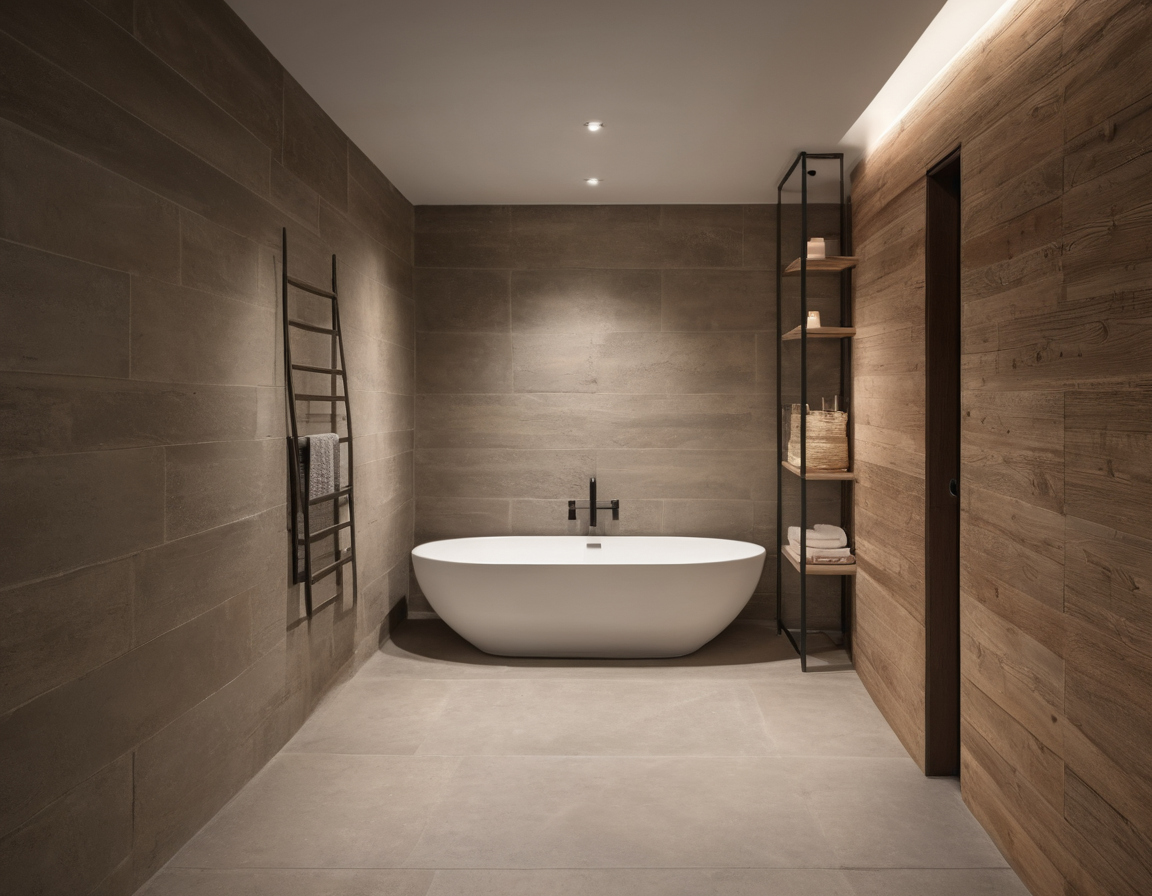
Worked bathroom budgets should show assumptions, allowances, and risk separately shown as an editorial reference for proportion and finish coordination.
A bid comparison should preserve the same allowances and assumptions
Require bidders to price identical quantities, allowances, permit responsibility, waterproofing, schedule constraints, exclusions, alternates, and change-order markup. Use these bathroom contractor scope items to verify. Choose the bid that assigns costs and risks clearly, not merely the lowest opening total.
Bathroom renovation cost FAQ
Is $10,000 enough for a bathroom remodel if the fixtures stay in the same locations?
It may cover a controlled refresh in some labor markets, but it is unreliable without defined demolition, waterproofing, finishes, permits, overhead, and repair scope.
Is it expensive to change the layout of a bathroom?
Layout changes become expensive when drains, vents, supply lines, circuits, framing, or surfaces outside the bathroom must move. Request separate prices for each relocation.
What is a realistic budget for a small 5×7 bathroom renovation?
Scope, access, labor market, finish level, and concealed conditions matter more than floor area alone. Build the estimate from local bids and layered cost categories.
What is the 30% rule in remodeling, and should it determine bathroom contingency?
The 30% rule is planning shorthand, not a universal standard. Contingency should reflect documented uncertainty.
How much contingency should an older bathroom with possible water damage carry?
Use a higher uncertainty tier until testing or controlled openings reduce the unknowns. Set the reserve from priced repair units and identified exposure rather than an unsupported percentage.